




Theresa Koon’s Promise Delivers
Opera is a fascinating medium that has taken many forms since its conception. The most memorable operas of the past and present have become staples in the repertoire through a combination of tangible and intangible elements: unforgettable music; imaginative scenery and costumes; spellbinding plots; and mesmerizing characters…
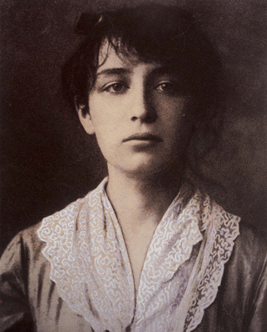
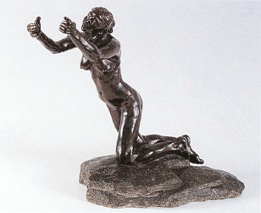
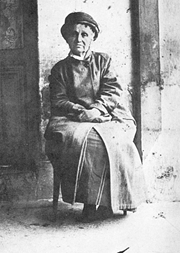
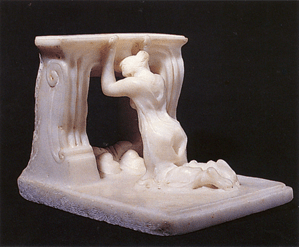
Fortunately, for those who love opera and desire to feast on new and exciting works, there are composers like Theresa Koon, the Oregon-based composer/librettist who has contributed to this much-loved medium with her new opera, Promise, about the sculptor Camille Claudel (1864-1943)…Koon is a rare breed of composer whose…professional acting and singing credits show a remarkable range of expertise in fields that have served to impact on the eloquence with which she incorporates the varieties of expression needed to create the world of the much admired, despised, and misunderstood Camille Claudel; the brilliant artist who showed much “promise” at an early age, became famous as a sculptor and infamous as the model and mistress of Rodin, eventually succumbing to mental illness (destroying every new sculpture she created), and spending the last decades of her life in French mental institutions before dying in 1943.
Koon’s pursuit of the subject of the opera seems less a choice than a fateful conjoining of unconnected events. Just after World War II her parents lived for a time in Chatou, France next door to the family of Paul Claudel’s son, Henri Claudel…Eventually, Koon reconnected with the Claudel family in France, who shared their remembrances, personal letters and their own research about Camille. She was also allowed to view private materials at the Rodin museum in Paris. From this curiosity and research came insight, inspiration, craft, imagination and eloquence that united to bring forth an extraordinary, artistic operatic experience, resulting in Promise.
A number of questions arose from these encounters with the elusive Camille and those who knew her. Was she really insane or a victim of commitment to Rodin and to her art? What are the subtle nuances in life that bring “promise” to fruition? Is one obligated to express one’s talent if one has “promise”? What is the role of art in society? Is there a correlation between art and sanity? What subtleties of mind and spirit are connected to creativity?
The composer did not write an opera that was simply a biography of Camille. Nor did she exploit the dramatic, volatile relationship between Camille and her mentor/lover Rodin, who was unwilling to marry Camille and felt threatened by her growing fame as a sculptor. Rather, she chose to delve into the questions about art and sanity, art and spirituality, and art in our society. Primarily, it is a story about love; an interpretative work about Camille through a factual account of important relationships and events. However, the conversations between characters are imaginary, interpreted dialog that bring the characters to life. The opera centers on the relationship between Camille and her brother Paul. Members of the Claudel family called them “twin souls”. Both were creative, forever tied in spirit. At the end of her life, Camille comes to a place of peace, somehow focusing on joy as seen in the light in her face during her final days. Paul was with her to the very end. During the course of the opera, Paul comes to realize that he can only love her, not take away her pain or save her. Once he stops trying to save her, Camille feels connected to him again, permitting her to see how much he loves her. This love transcends all of her suffering. She reaches out to comfort him and is able to love again. Some believe that it is that bond between the two that prevented Camille from committing suicide…
The opera is beautifully constructed with arias, duets, and ensemble pieces that depict Camille’s life, environs, relationships, and emotional turmoil. The roles require strong actors able to project the subtleties of nuance in the dialog sections. There are gorgeous, inspiring arias and scenes for the characters to express anger, loss, fear, insecurities, or joy in intimate and overtly dramatic situations. Koon’s compositional style is basically tonal but becomes angular when needed to project a wide emotional range. Equally effective instrumental writing that is never cloying or intrusive upon the vocal lines supports the strong and direct vocal writing. She uses the small instrumental ensemble in dramatically creative ways: underpinning the dialog sections with a single clarinet or violin that becomes an audible character in response to what has been said by the actors; as a reflective instrumental duet during onstage dramatic pantomime; or as a flexible instrumental ensemble capable of projecting every nuance of the text from the spiky, pointillism of articulated gossip to the soaring and lush harmonies that portray strong emotion…
Though Promise would be a rewarding undertaking for semi-professional or professional opera companies, it is particularly suitable for college and conservatory opera training programs…This is an opera demanding to be heard and seen. It has layers of meaning that listeners will want to discuss and music that will long be remembered. It is a versatile work that can be done in concert form or as a fully staged production. But the latter would be most satisfying and would serve to bring the fascinating Camille to life once again. After meeting her here, one can only want to know more about why she stayed alive at all.
–Sharon Mabry, PANPIPES, Fall 2006
Strong Work Makes a ‘PROMISE’ Fulfilled
PROMISE, an engaging new opera by Theresa Koon, considers the tormented journey of an artist going mad…The style is tonal and highly textured, by turns charming, jagged and haunting…Opera needs new works to refresh the art form, and “Promise” is exactly the kind that deserves a full production.
–David Stabler, THE OREGONIAN, April 18, 2004
The Love that Exists in All Things
An Analysis of PROMISE, an Opera by Theresa Koon
Theresa Koon’s opera Promise is a deeply impactful and engaging piece of artwork that…follows Camille [Claudel]’s rise and fall as an artist through her romantic relationship with her teacher [and lover], Auguste Rodin, …her close, yet fluctuating relationship with her brother Paul, and her finale: peace, after…years of debilitating paranoia and mental illness. The audience is introduced to the pressures that sought to dictate Camille’s “promise”, including those from Rodin—to be his source of inspiration…, from Paul—to share her gifts as an act of religious duty, from her father—to sculpt as a way to save her from mental illness, and from society [and] her mother—to relinquish all sense of artistic and personal independence.
The music and text of the opera reflect the subtleties of intimate passion and pain each character experiences, and works to connect them to their ideology around themes of artistry, sexism, religion and spirituality. It is… these planes of emotion, logic, confusion and understanding that position the listener in a place of profound knowing– that love is in the presence of all things, the reason why we can find peace in chaos, and beauty in pain.
…Promise is a chamber opera and, without the optional doubling of certain roles, features up to [thirteen roles for] singers… This flexibility in the number of performers was partially motivated by the intention of making the opera easier to produce by colleges and universities. Theresa also explains that she chose a smaller [instrumental] ensemble to allow for more intimate singing. This prioritizes the realism and therefore relatability of the story.
…In addition to using the clarinet to communicate psychological imprints within Camille’s life, Theresa uses the tonal center as a reflection of mental clarity… Luckily for music listeners alike, Promise features a mix of both [tonality and atonality], however not at the expense of either technique. Similar to the concept of tonal centricity introduced by Bartok, …the music will be moving along and then [the tonal center] slips…providing a sense that the tonality is “slippery”, much like the psyche of her characters. For this reason, Theresa’s approach to tonality is excitingly new and different while remaining relatable.
In [God Flown Away], Camille has just realized that Rodin will never leave his common law wife, Rose, and is experiencing an awakening to a world that she no longer understands. “…The knowing of how I love, how I work, how I pray. It never intruded, I wasn’t confused, only this sweet hello, and then God flew away.” At measure 27 we see a change in Camille’s thought process reflected in a tonal shift, as the weight of her heartbreak calls her to reassess reality.
Theresa’s exploration of tonal centers and her approach to assigning lyrics pitches through intuition creates deceptively hard vocal lines. The overarching melodic contour is intuitive and fits the emotions the characters are experiencing, however the chromatic steps and leaps leave unsuspecting singers lost.
…[In]“My Brother” which takes place in scene four, Camille, age sixteen, is found sculpting her younger brother Paul. Here, in the A section of the piece’s ABB’ form, the harmonic progressions in the orchestral ensemble reflect the passion and excitement she feels describing her brother and his future. Once the B section begins, the piece blossoms into a … ballad as Camille claims her unconditional love and understanding for Paul: “No one has known me like you. I will never forget where you are in my heart. All that you are.” Paul later joins Camille on this line within the reprise of the piece. A component of their bond, “My Brother” also depicts the spiritual understanding the two once shared when they would “listen to the stones.” In a dark and empty musical atmosphere, Paul and Camille foreshadow how this connection would remain true until Paul “found God” and Camille found an extension of the [spirituality] she felt in her art: Rodin. However, the love between Paul and Camille remained constant, with a reconciliation of the two not long before her death.
… “He Spoke to Me,” [is] sung by Camille as she poses for Rodin while he sculpts her. This is where we see Camille start to fall in love for the first time. The piece begins with a cello solo that rises sensually in pitch and tempo only to fall at a much slower pace expressing the reflexivity of amplifying adrenaline. This cello line represents the way Camille not only sees Rodin, but how she experiences him physically through the lens of fresh love and of finally feeling understood. However, in accordance with the layered complexities of Theresa’s other pieces, “He Spoke to Me” is not as simple as Camille’s increasing joy. The accompaniment in this piece feels dark and almost poisonous with an unstoppable drive, relating to the passion and pain that would become Camille and Rodin’s relationship. As the chaos grows, it is apparent that “He Spoke to Me” is a catalyst to describe an intimate and sexual frenzy between the lovers. It is in this heated chaos that the lines, “He is my form. I am his blessed feeling. He is my storm, I am, I am his teeth, his lips my sweet, my wildest flight,” describe how through their physicality the lovers see themselves becoming one, resulting in…a loss of recognition of self. It is through this physical and deeply spiritual surrender that Camille gives all of herself to Rodin and to their love, losing her independence in the process.
…The start of “Epilogue” features an ethereal culmination of sustained notes within the orchestral and vocal ensemble. On top of this gently grounding foundation is Paul’s voice, in awe, saying in disbelief, “Can it be? Your faith was stronger than mine.” Paul speaks to the broader population of humanity saying, “Your life is what you have to show us now. Not art, not blessed beauty, not even the sweet religion I thought would save you. Camille, you have shown us your heart.” Here, Paul is experiencing a second spiritual awakening, one that looks beyond the constraints of Catholicism and artistry. He sees that Camille’s value is not found only in her art and [is] instead in the culmination of everything that made up who she was and the boundless love that existed within her. Just as in “Prologue: Love is,” voices from the vocal ensemble begin to cascade, exclaiming, “Broke into a fire of joy” as if the joy from the release of fear was itself spreading like a fire throughout the composition. Paul’s final line states: “Love is the grace in silence”–the silence Camille found within herself, an uncontainable energy of love that persists in all things.
–Sarah DeYoung, SUBITO Music Journal, Portland State University, June 2023.
Theresa Koon’s PROMISE Fulfills
The word “promise” can be used to mean several things. It can be a declaration that something will or will not be done, an indication of future virtuosity and distinction as in a singer shows promise, a reference to a pledge of some kind, or the expectation of an engagement, act, gift or stated outcome. Lastly, it is often used as an emphatic declaration (I won’t do that again, I promise you!). All of these usages appear, in some manner, in Theresa Koon’s new opera, Promise, about the sculptor Camille Claudel (1864-1943)…The Oregon-based composer/librettist, Theresa Koon, has an extensive resume that includes degrees and training in voice, composition, improvisation and acting, as well as ballet… These experiences and skills have contributed to the fluency and security with which she creates the world of the much admired, despised and misunderstood Camille Claudel, the brilliant artist who showed much “promise” at an early age. Claudel became famous as a sculptor and infamous as the assistant, model, mistress and muse of Rodin, eventually succumbing to mental illness (destroying every new sculpture she created), and spending the last decades of her life in French mental institutions before dying in 1943…
A number of questions arose from [Koon’s] encounters with the elusive Camille and those who knew her. Was she really insane, or a victim of a complicated commitment to Rodin? Did notoriety, responsibility to her art, or expectations of greatness cause her ultimate cessation of creativity? What are the subtle nuances and coincidences in life that bring “promise” to fruition? How much of the fulfillment of “promise” is fate? Is one obligated to express one’s talent if one has “promise”? What is the role of art in society? Is there a correlation between art and sanity? What subtleties of mind and spirit are connected to creativity? These are questions that all artists, their mentors and loved ones face when choosing a roadmap to help nurture a potentially great artist. Watching these ideas play out in Promise will give the audience much to think about concerning the development of talent and problems that arise when dealing with the innate sensitivity of the artist’s temperament.
This opera is not simply a biography of Camille. Koon did not focus on the intense, mercurial relationship between Camille and her mentor/lover Rodin, who was unwilling to marry her. Eventually, irreconcilable artistic and personal differences developed between them and Rodin felt threatened by her growing fame as a sculptor. Rather, Koon chose to delve into the questions about art and sanity, art and spirituality, and art in our society. Primarily, this is a story about love in all its forms, joys and disappointments; it serves as an enlightening work about Camille through a factual account of important relationships and events. However, the conversations between characters are imaginary, construed dialog that bring the characters to life.
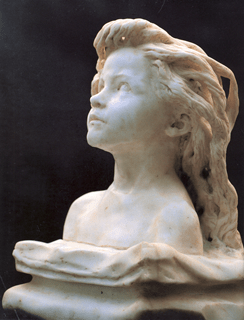
The heart of this work concerns the relationship between Camille and her brother Paul. Members of the Claudel family called them “twin souls.” Both were fragile, creative spirits, forever tied. At the end of her life, Camille found mental, physical and spiritual peace. Those who were with her at the end of her life spoke of the joy that was seen in the light of her face during her final days. Paul was with her to the very end. Some believe that it is that bond between the two that prevented Camille from committing suicide. Near the end of the opera, Paul bets her to fight to live and she promises that she will. During the course of the opera, Paul comes to realize that he cannot take away her pain or save her; he can only love her. Once he stops trying to save her, Camille somehow reconnects with him and feels his love for her. This love transcends all of her suffering. She reaches out to comfort him and is able to love again. After having created and destroyed many sculptures, then becoming dormant for many years, she is suddenly able to create her final work, a sculpture of her brother’s face. It would be the only work she did not destroy from that period of her life…
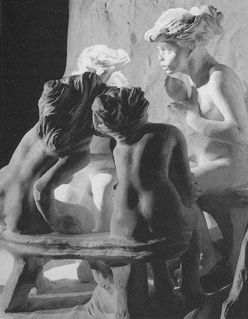
This opera with thirteen scenes, several segues and interludes, and considerable connecting dialog is beautifully constructed with arias, duets and ensemble pieces that depict Camille’s life, environs, relationships and emotional turmoil. The various segments proceed seamlessly as the small ensemble of instruments is used to connect dialog with music, voices with voices, and characters with dramatic import. Koon uses the small instrumental ensemble in dramatically creative ways: underpinning the dialog sections with a single clarinet or violin that becomes an audible character in response to what has been said by the actors; as a reflective instrumental duet during onstage dramatic pantomime; or as a flexible instrumental ensemble capable of projecting every nuance of the text from the barbed pointillism of animated gossip to the ardent and lush harmonies that portray strong emotion. This pristine and flexible ensemble of instruments becomes the thread that holds the work together. It can be delicate at one moment and overtly harsh and dramatic at another. The singing roles require strong actors able to project the subtleties of nuance in the dialog sections. There are gorgeous, soaring, inspiring arias and scenes for the characters to express anger, loss, fear, insecurities or joy in intimate and overtly dramatic situations. The inclusion of elements of dance, voice and theater in this opera are natural outgrowths of the composer’s multifaceted training and professional life. Camille’s emotional changeability is often projected through the voices of the sculptures as the audience is allowed to view Camille’s circumstances and feelings as she sculpts them.
Koon’s compositional style is basically tonal but shows an easy ability to become angular when needed to project an extreme emotional range. The effective instrumental writing is never excessive or intrusive upon the vocal lines. Rather, it completely and satisfyingly supports the strong and direct vocal writing. Promise is a work that will be intellectually and musically gratifying for both singers and instrumentalists. The composer’s innate ability to write fulfilling music for each character and instrument is apparent and will be appreciated by those who perform the work…
This is an opera that deserves to be seen and heard. Its thought-provoking themes and memorable music will give listeners much to discuss and enjoy. It is a versatile work that can be done in concert version or as a fully-staged production. The latter would be more satisfying and would allow the fascinating Camille to come to life once again.
–Sharon Mabry, IAWM Journal Volume 12, No. 2, 2006.
 tikkunmusic.com